









YL Yash Lunawat
Booking projects for Q4 2026

Backend and cloud engineering you can see, approve and own.

I'm Yash, a backend and DevOps engineer in India. I build APIs, internal tools and Cloudflare apps for startups and small teams. You get a fixed price for each milestone, a live portal to follow the work, and code that sits in your accounts from the first commit.

  • Fixed price per milestone
  • Approve before you pay
  • You own the code
  • NDA on request
clients.yashlunawat.com/portal/projects
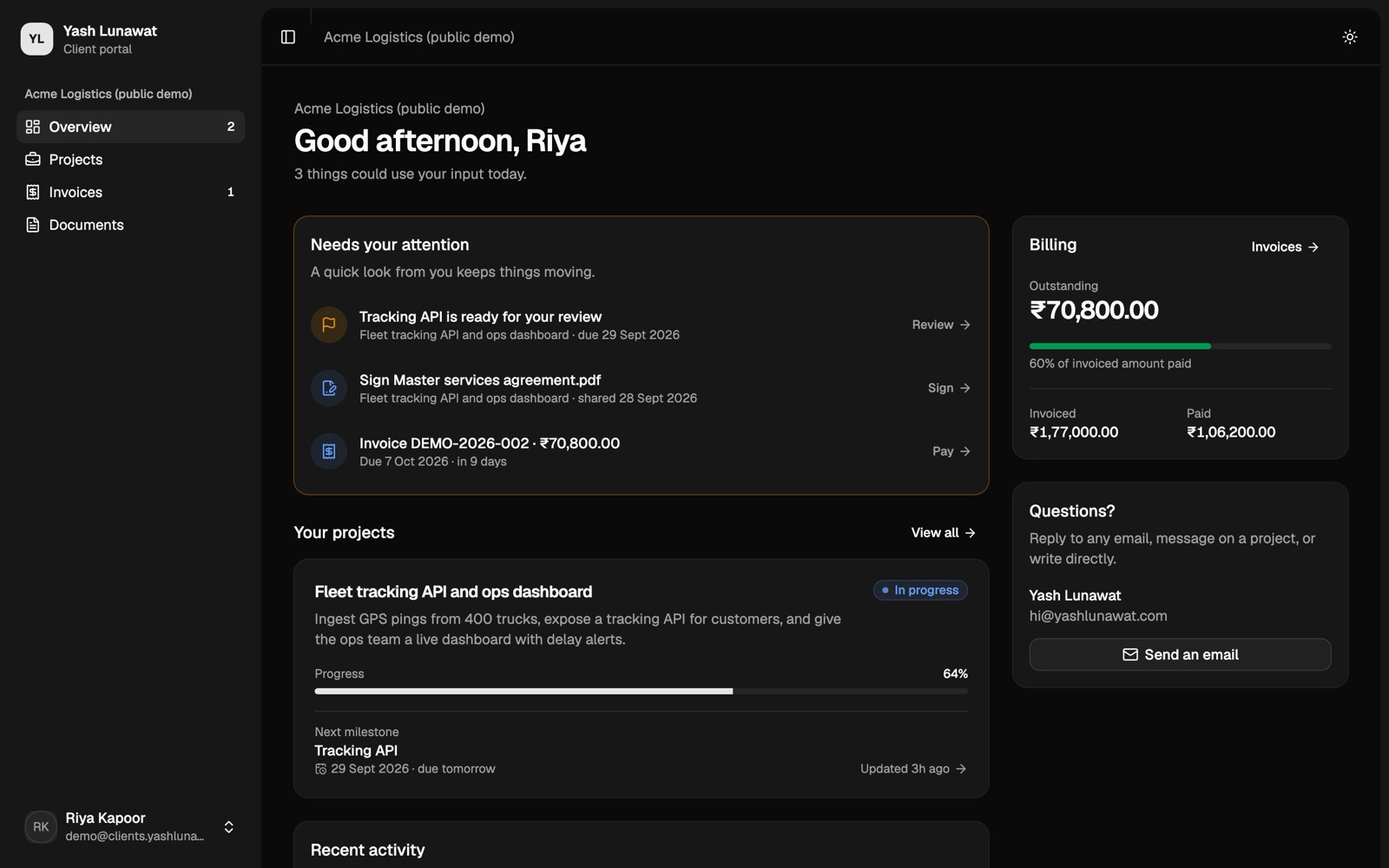
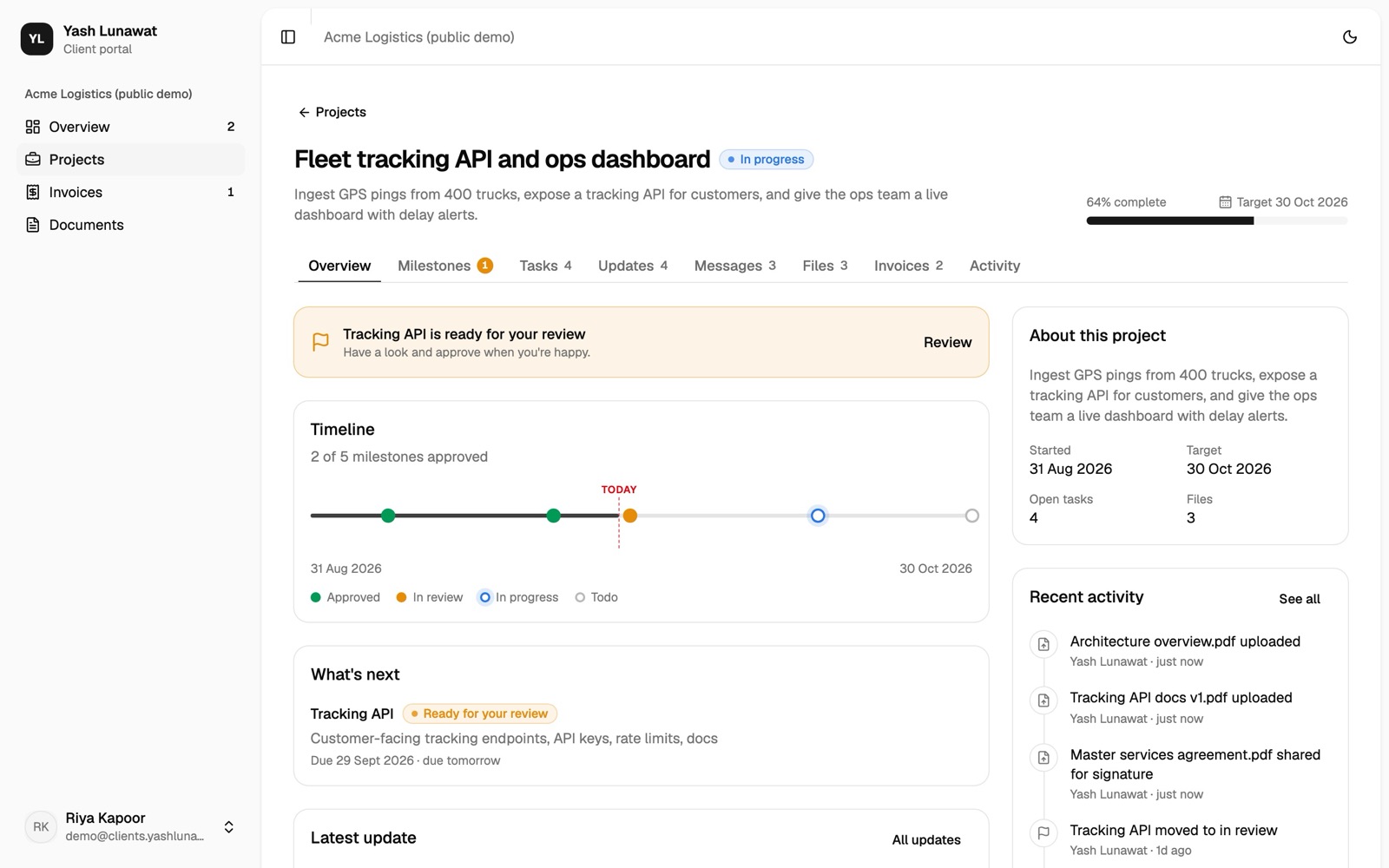
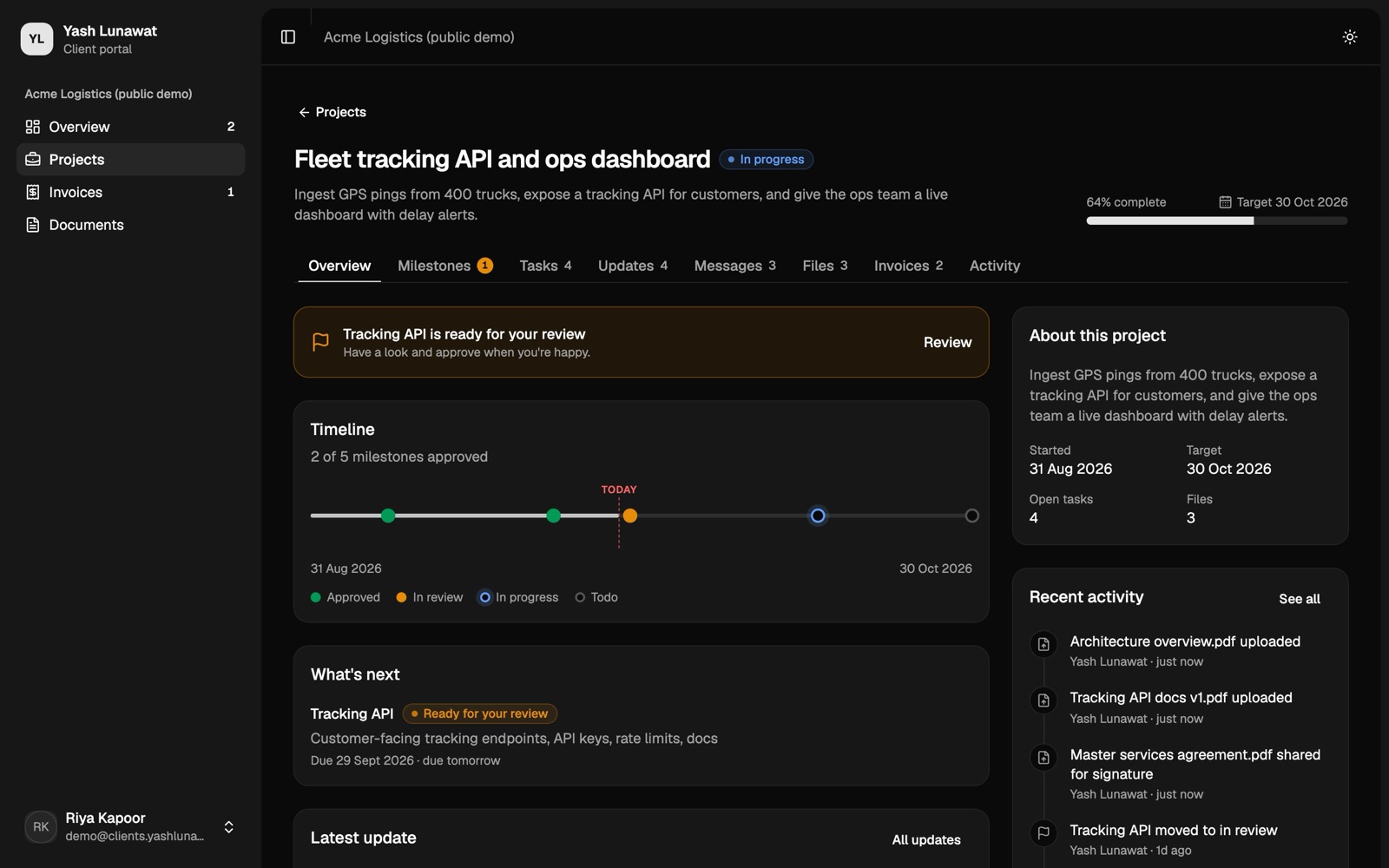
Client portal project page with timeline, milestone awaiting review and activity

The real client portal every project gets. The data in this screenshot is a demo.

01 · Selected work

Systems I've built end to end

Each one was designed, built, deployed and documented by me. Code and live demos are linked where they're public.

Babel Room

Real-time · Cloudflare edge

Multilingual voice calls where each person speaks their own language and hears everyone else in theirs.

Problem
Live translation usually means stitching several paid services together, with the lag and bills that come with them.
What I built
Speech-to-text, translation and text-to-speech per audio chunk inside Workers AI, with a Durable Object fanning out audio and captions.
Result
The whole pipeline runs on Cloudflare with no external servers, and a post-call summary is written to R2.
Stack
Workers, Durable Objects, D1, R2, Workers AI, Workflows, WebRTC, React
per audio chunk
Whisper STT→Llama 3.1 translate→MeloTTS
RoomDO fans out audio + captions per participant

FundOS

Internal tool · Fintech

An operating system for venture funds: portfolio health, founder updates, LP reporting, capital calls and cap tables in one place.

Problem
Fund operations live across spreadsheets, inboxes and slide decks, with nothing to audit.
What I built
40+ data models with role-based access for analysts, partners, founders and LPs, plus health scoring and waterfall tools.
Result
One system of record. AI features sit on top of deterministic logic and fall back to rules when no AI key is set.
Stack
Next.js 15, TypeScript, Prisma, PostgreSQL, Redis, Trigger.dev, Docker
40+
data models
4
roles, scoped per query

Vessel

DevOps · Self-hosting

A single Go binary that turns a plain Linux VPS into a place you can deploy and run apps from a web UI.

Problem
Self-hosting tools like Metabase or n8n means hand-writing Docker, nginx, TLS and backups every time.
What I built
One-line install that sets up Docker, nginx, firewall and certificates, with templates, live logs and backups.
Result
Deploys, restarts, updates and restores run from one small control plane instead of SSH sessions.
Stack
Go, SQLite, Docker, nginx, systemd
  • ✓ Docker, nginx, firewall and TLS bootstrap
  • ✓ Templates for Metabase, n8n, Umami, Plane
  • ✓ Live logs, restarts and updates from a web UI
  • ✓ Full backups and restore

All projects on yashlunawat.com →

02 · Services

What I can take off your plate

Most projects mix a few of these. The written scope says exactly which, and what "done" means for each.

APIs and backends

The server side of your product, built to be handed over.

  • REST APIs, auth, roles and API keys
  • Payments with Razorpay or Stripe
  • Background jobs, queues, webhooks
  • PostgreSQL or D1 schema and migrations

Cloudflare apps

Fast globally, cheap to run, nothing to patch.

  • Workers, D1, R2, Queues, Durable Objects
  • Real-time with WebSockets
  • Email sending and routing
  • Moving off Heroku or a VPS

DevOps and deploys

Shipping stops being a ritual only one person knows.

  • CI/CD with preview deploys per PR
  • Docker, VPS hardening, backups
  • Monitoring, uptime checks, alerts
  • Cloud cost and security review

Internal tools

Replace the spreadsheet your team keeps fighting with.

  • Admin panels and ops dashboards
  • CRMs and client portals like this one
  • Imports, exports, approvals, audit logs
  • Role-based access

AI features that hold up

LLMs where they help, deterministic code where they don't.

  • Extraction, summaries, search
  • MCP servers and agent tooling
  • Model choice from measured evals
  • Review steps before AI output changes data

Rescue and audits

For code that works until someone touches it.

  • Written review with fixes ranked
  • Performance and cloud bill cuts
  • Tests around the scary parts
  • Docs so the next person isn't stuck

03 · How it works

You always know what's done, what's next and what you owe

  1. 01

    Intro call

    30 minutes, free. You explain the problem, I ask about constraints and deadlines.

  2. 02

    Written scope

    Milestones, each with a deliverable, a date and a fixed price. Nothing starts until you agree.

  3. 03

    Build in the open

    Updates, preview links, tasks and messages land in your portal as the work happens.

  4. 04

    You approve, then pay

    Click Approve on a finished milestone. Only then does its invoice go out.

  5. 05

    Handover

    Code, docs, a runbook and every credential, all in your accounts.

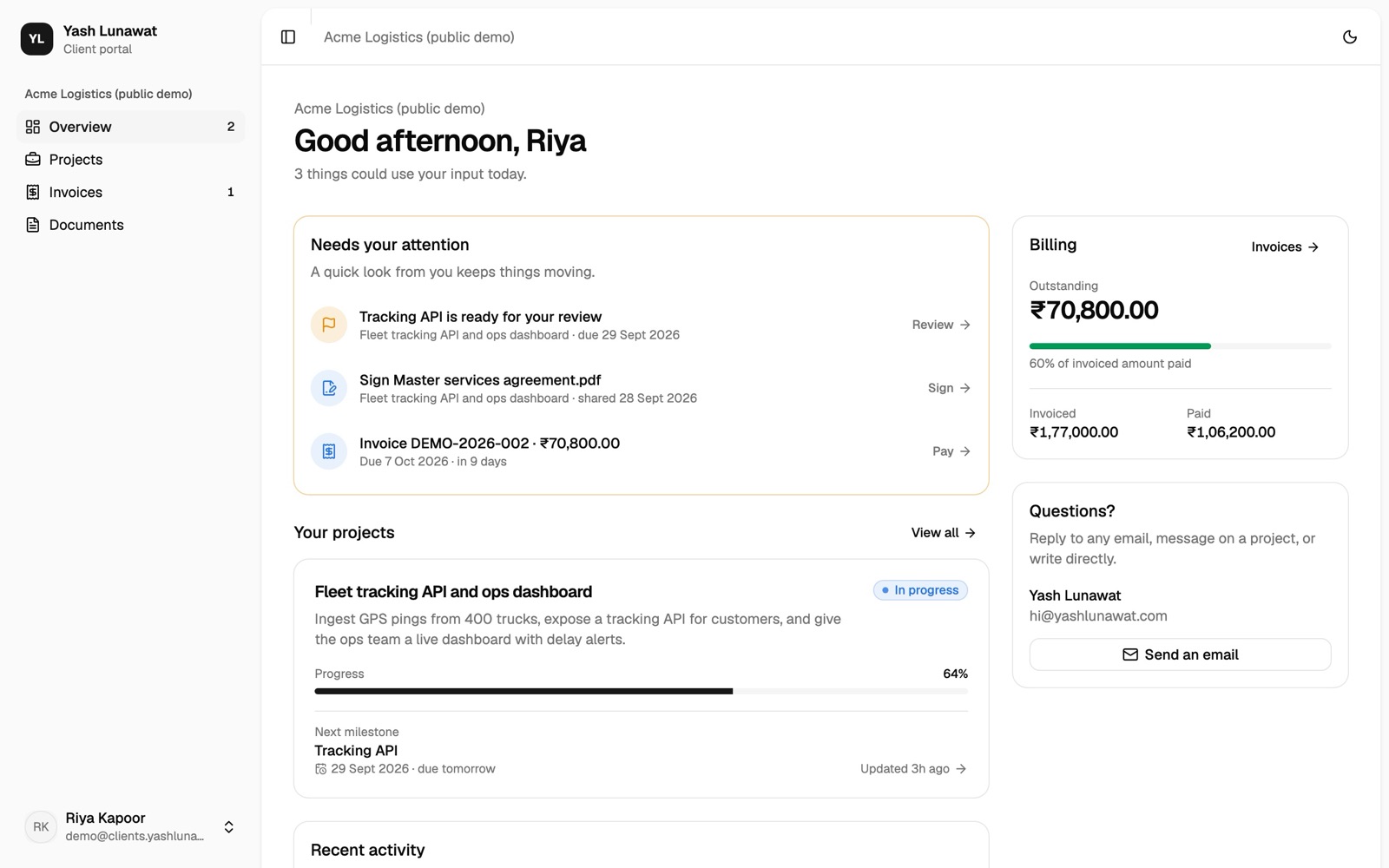
Your project portal

One private place for the whole project

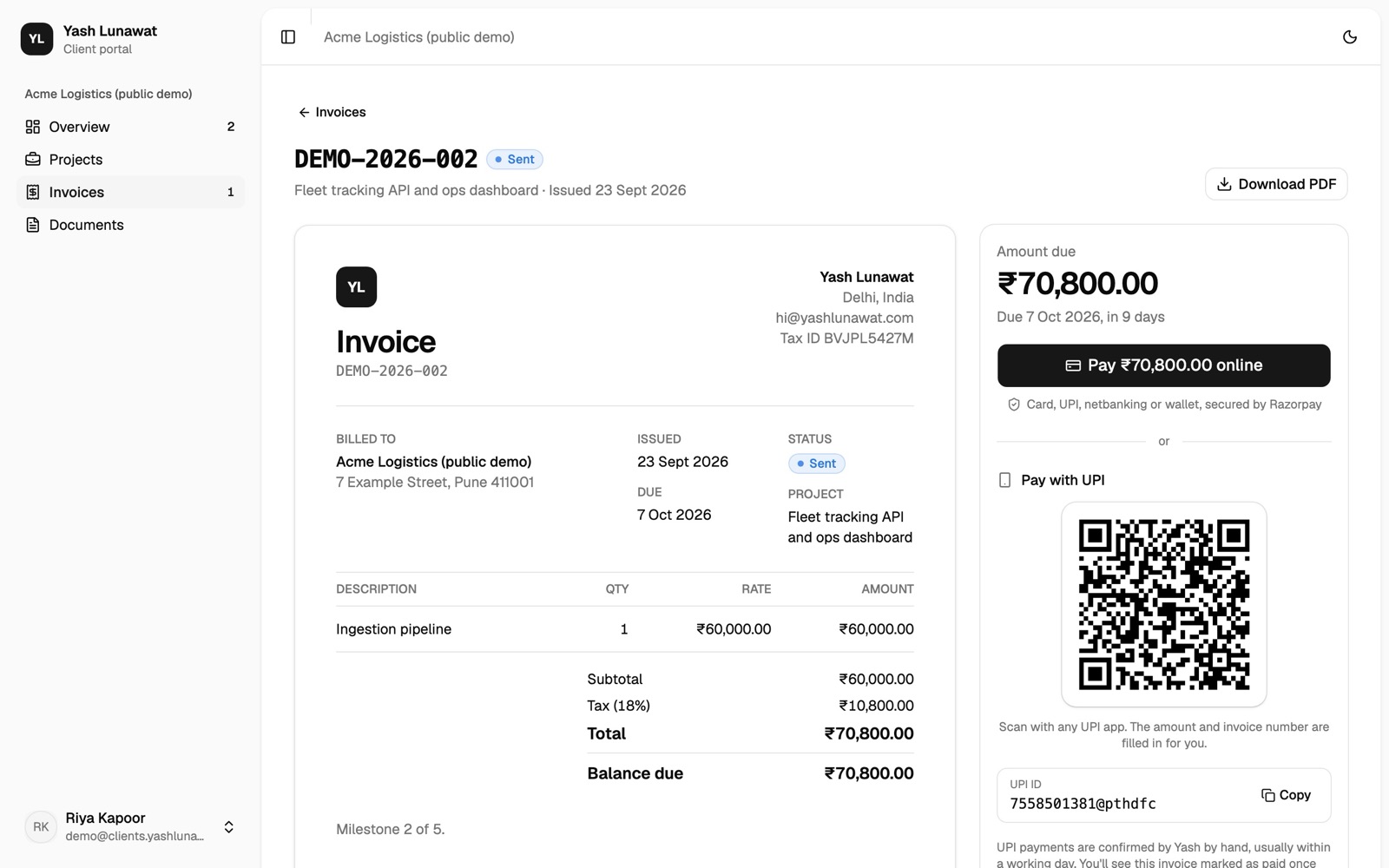
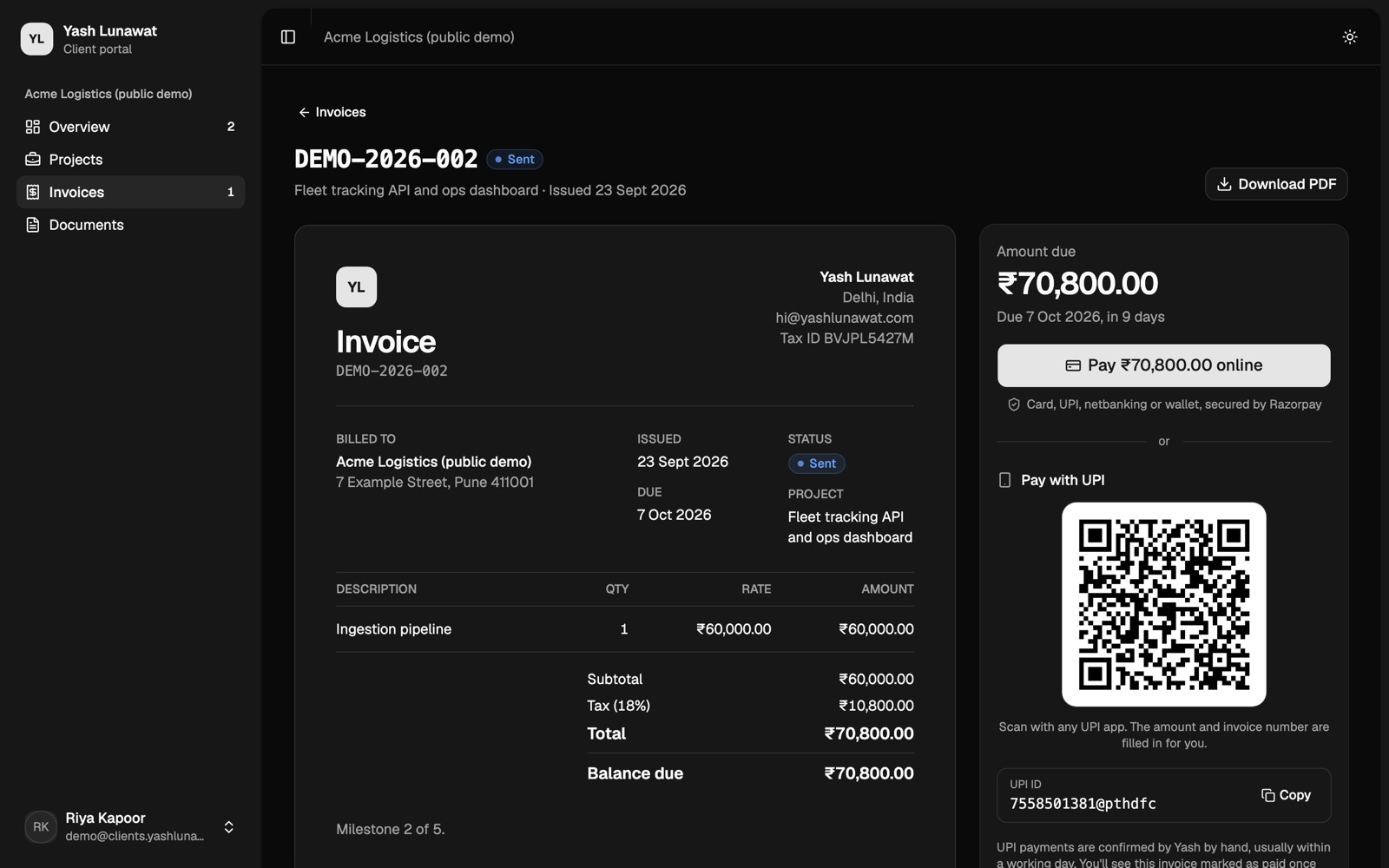
You sign in with your email, no password. Everything below is in the real portal, and you can click through a demo right now.

Open the live demo

Read-only, made-up data, no sign-up.

Portal overview

04 · What you can count on

The terms, before we talk

Fixed price per milestone

No hourly meter. If scope changes, it becomes a new milestone with its own price, and you decide.

You approve before you pay

A milestone is invoiced after you've tried it and clicked Approve. The portal records who approved what and when.

Everything is yours

Repositories, cloud accounts, domains and data sit in your name from day one. Nothing is locked to me.

Written, searchable decisions

Updates, messages and approvals live in the portal, so nothing depends on someone's memory of a call.

Confidential by default

Happy to sign your NDA before the first call. Client work never appears in my portfolio without your permission.

Proper invoices, easy payment

Tax invoices with your company details. Pay by card, UPI, netbanking or bank transfer.

05 · Engagements

Three ways to work together

Prices depend on scope, so I quote after the intro call. You get the number in writing before any work starts.

Start here

Scoping sprint

A short, fixed-price engagement for larger or fuzzy projects.

  • Requirements and architecture workshop
  • Data model and API contract
  • Milestone plan with fixed prices
  • Yours to keep, whoever builds it

Most projects

Fixed-scope build

A defined product or feature, delivered in approved milestones.

  • Priced milestones, invoiced on approval
  • Preview deploys for every milestone
  • Client portal for the whole project
  • Handover with docs and runbook
Start a project

Ongoing

Monthly retainer

A set number of days each month for a product that keeps moving.

  • Features, fixes and upgrades
  • Infra and on-call for what I built
  • Monthly summary in the portal
  • Pause or cancel with a month's notice

06 · FAQ

Questions clients ask first

Something else? hi@yashlunawat.com

Who owns the code?+

You do. The repository is in your GitHub organisation and everything deploys to your own cloud accounts from the first day.

How and when do I pay?+

Each milestone has a price in the written scope. When it's ready you review it in the portal and click Approve. Then the invoice goes out, and you can pay it in the portal by card, UPI or netbanking through Razorpay, or by bank transfer.

What if the scope changes halfway?+

We add it as a new milestone with its own price, or swap it for one that hasn't started. The portal shows the change so nobody has to remember what was agreed.

Where are you, and how do we communicate?+

India, on IST. Calls can be scheduled for European or US hours. Day to day, the portal and email carry updates and decisions, so time zones matter less than you'd expect.

Do you work alone?+

Yes. You talk to the person writing the code. I take a small number of projects at a time so each one gets proper attention.

Will you sign an NDA?+

Yes. Send it with your enquiry and I'll sign it before the call.

Do you take small jobs?+

Yes, if the scope is clear. A one-week fix, a deploy pipeline or an audit is a good way to see how I work before a larger project.

07 · Start a project

Tell me what you're building

A few lines is enough. I reply within two working days.

  1. 1I read it and replyWith questions or times for a call.
  2. 230-minute callFree, no pitch. We check if it's a fit.
  3. 3Written scope and priceMilestones, dates and a fixed price for each.
What do you need?

Goes straight to me. No newsletter, no sharing.